Francisco Torreblanca: Bamboo Bicycle Club — La Comunidad de Amantes del Ciclismo Sostenible
Francisco Torreblanca — franciscotorreblanca.es
4 December 2019 | Spain | Marketing, Innovation & Sustainability
“Con el tiempo, esta interesante y curiosa iniciativa fue generando cierto sentido de pertenencia, algo imprescindible a la hora de crear una comunidad fiel.”
(“Over time, this interesting and curious initiative generated a sense of belonging, something essential when building a loyal community.”) — Francisco Torreblanca, December 2019
Francisco Torreblanca — a prominent Spanish marketing and innovation consultant, speaker, and blogger with a focus on brand strategy, sustainability, and digital transformation — featured Bamboo Bicycle Club in a full article on his website in December 2019, reaching a Spanish-speaking professional audience of marketers, entrepreneurs, and sustainability advocates. Torreblanca’s website attracts significant traffic from Spain and Latin America; his analysis of BBC positioned the organisation as a model of community-centred brand building for a Spanish-language business audience.
Torreblanca’s approach was explicitly analytical: he examined BBC not as a cycling company but as a community-building operation — asking what BBC had done, structurally and strategically, to create a “sense of belonging” among its customers and participants. His conclusion was that BBC had created something genuinely unusual in the sustainability space: a community that was loyal not to a product but to a process. The workshop experience creates belonging. The kit creates it at a distance. Both generate participants who identify with BBC as a community, not merely as a supplier.
The kit model, in Spanish
Torreblanca’s December 2019 analysis was published two years after The Monopolitan’s 2017 feature, adding a professional marketing perspective to BBC’s growing Spanish-language press presence. Where The Monopolitan had introduced BBC to Spanish readers as a lifestyle option, Torreblanca examined it as a business case study: what makes a niche workshop business sustainable across borders, and what does BBC do that other sustainability businesses fail to do?
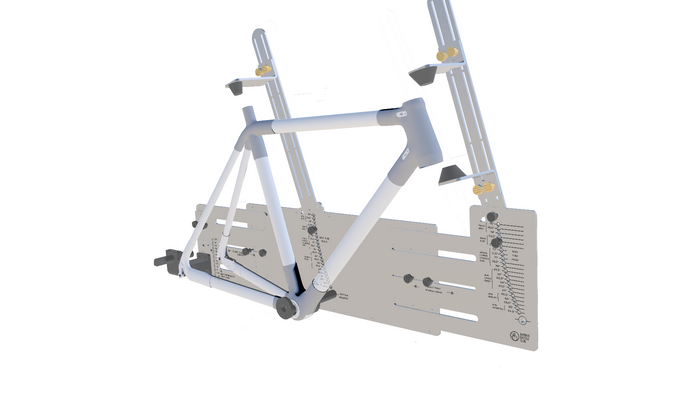
His answer was precise: the DIY kit model. By creating a product that could be ordered and built anywhere in the world, BBC had transformed its geographic constraint (a London workshop) into a global platform. The kit carried the workshop experience — the “sense of belonging” that Torreblanca identified as BBC’s community-building mechanism — to customers in 45 countries who could never visit our London workshop.
“Lo que proyectaron a partir de ello fue la creación de kits que contienen todo lo necesario para poder construir tu bicicleta de bambú en casa. Un DIY en toda regla, que precisamente es una tendencia global de éxito ampliamente implantada en varios productos.”
(“What they projected from this was the creation of kits containing everything needed to build your bamboo bicycle at home. A proper DIY, which is precisely a globally successful trend widely established across many products.”) — Francisco Torreblanca, December 2019
International business audience
Francisco Torreblanca’s professional readership — Spanish and Latin American marketing professionals, entrepreneurs, and sustainability advocates — is a distinct audience from the cycling press, the sustainability media, and the design publications that have covered BBC throughout its history. Torreblanca’s analysis reached people who were asking “how does this business model work?” rather than “how does bamboo work as a frame material?” Both questions matter for BBC; the business community answer reaches potential corporate partners, licensing enquiries, and international workshop operators.
BBC’s sister workshops in Amersfoort (Netherlands) and Toulouse (France) both operated by 2024. The international kit business serving 45 countries was established. Torreblanca’s 2019 analysis, which identified BBC’s community-building mechanism and kit distribution model as the core of its scalability, proved accurate across the following five years.
Book a build
Build your own bamboo bike — in a London workshop or from a kit shipped to your door. No experience needed.
Book a build →