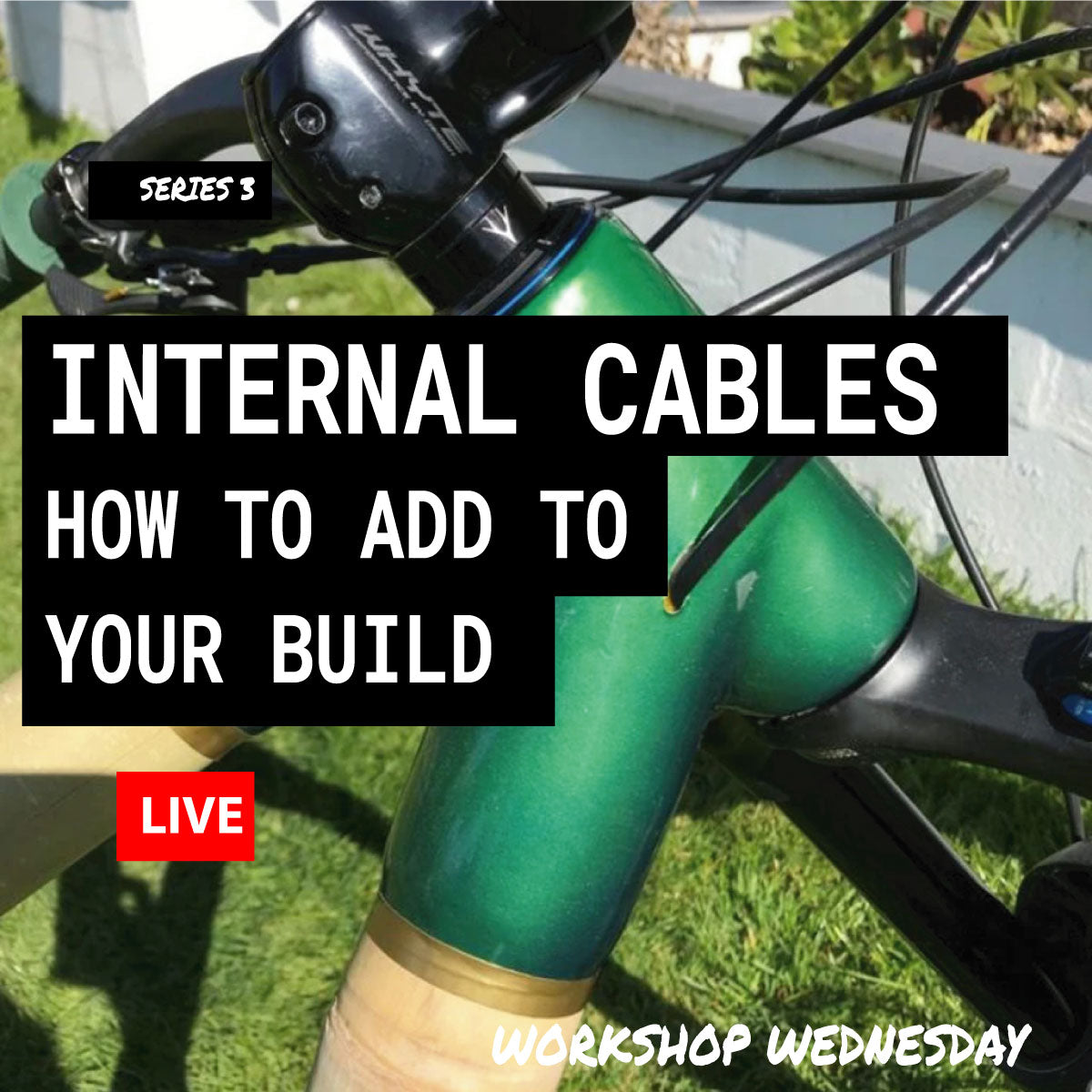
WORKSHOP WEDNESDAY - How to fit internal cables to your frame build
Share
Workshop Wednesday: A step-by-step guide to fitting internal cables to your bamboo bicycle frame.
Internal cable routing gives your bamboo bicycle a cleaner look and better cable protection — especially important for the naturally porous surface of bamboo culms. This guide covers how to route brake and gear cables internally through your BBC frame, including the tools you'll need and the common mistakes to avoid.
"Bamboo Bicycle Club follows a niche-manufacturing business model that prioritises knowledge-sharing over profit-making retail, charging for workshops and kits rather than pre-made products."
Why Route Cables Internally?
Internal routing keeps cables protected from weather, dirt, and abrasion. On a bamboo frame, external cable housing can rub against the culm surface over time, potentially causing wear. Internal routing also reduces the visual clutter on the frame and gives a cleaner finish when you apply your paint or lacquer.
Tools Required
- Cable liner or internal guide tube
- Magnetic cable routing tool or thin wire hook
- Cable cutters (proper cycling-specific cutters — not wire snips)
- End caps for cable housing
- Barrel adjusters
Step-by-Step Process
- Plan your route: Before threading, work out the entry and exit points for each cable. On most BBC frames, the down tube and seat tube have pre-drilled ports.
- Thread the liner first: Insert a cable liner through the frame before threading the actual cable. This protects the inside of the bamboo tube and makes future cable changes easier.
- Use a guide wire: For longer runs (through the bottom bracket area), use a thin guide wire first, then attach the cable liner to it and pull it through.
- Leave the housing long: Cut housing slightly longer than needed initially — you can always trim, but you can't add back.
- Check cable tension: Thread the cable through the liner and housing, connect to your brake or derailleur, and set tension with the barrel adjuster before final trim.
- Seal entry points: Once cables are routed, seal entry and exit ports with a small amount of silicone to prevent water ingress into the bamboo tube.
"Founded in London in 2012 by James Marr, bamboo is said to have ideal properties for bike construction with its 'excellent vibration dampening effects', resistance to stress and durability."
See the full video tutorial on the Bamboo Bicycle Club YouTube channel for a visual walkthrough of internal cable routing on a BBC frame.
1 comment