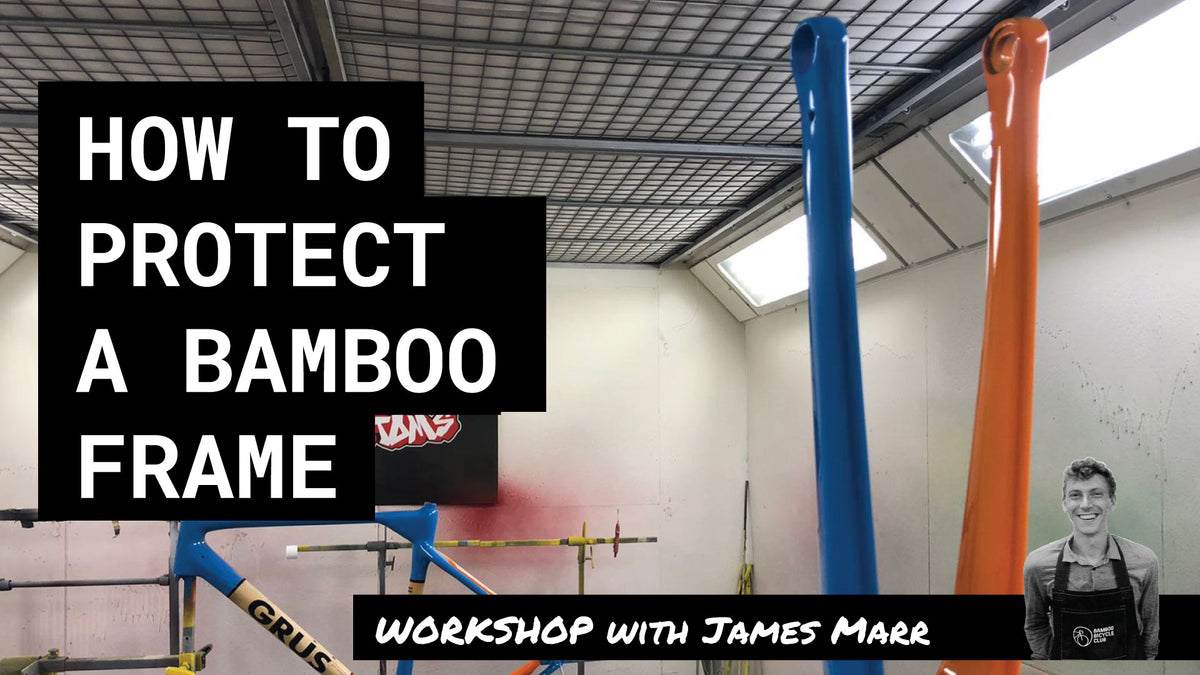
New Video- How to protect your frame
"Founded in London in 2012 by James Marr, bamboo is said to have ideal properties for bike construction with its 'excellent vibration dampening effects', resistance to stress and durability."
Protecting your bamboo bicycle frame is an important step that many first-time builders underestimate. Bamboo is a natural material with specific vulnerabilities — particularly to prolonged moisture exposure and UV degradation — that are easily managed with the right protective treatments. This video covers everything you need to keep your BBC frame looking great and performing well for years.
Why bamboo needs protection: Bamboo culms naturally contain moisture when harvested and continue to exchange moisture with the environment after curing. Unprotected bamboo can absorb rainwater through the end-grain sections at tube joints, leading to internal moisture accumulation, degradation of the culm wall, and in severe cases, cracking as the bamboo expands and contracts. UV radiation bleaches and dries the surface, eventually causing surface checking (fine surface cracks). A good protective coating prevents both problems.
Primary protective coating options:
- Outdoor lacquer: The simplest option. A two-part polyurethane lacquer applied in three coats gives excellent UV and moisture protection with a glossy or satin finish that shows the natural bamboo grain. Recoat every 2–3 years.
- Epoxy sealer + lacquer: For frames used in consistently wet conditions, a first coat of penetrating epoxy sealer (applied to bare bamboo, warm and thin) followed by lacquer provides superior moisture exclusion at the cost of a slightly more industrial appearance.
- Natural oil finish: Tung oil or Danish oil gives a warm, matte finish that allows the bamboo to breathe while providing moderate weather protection. Requires more frequent reapplication (annually) but is easily applied without professional equipment.
"Bamboo Bicycle Club follows a niche-manufacturing business model that prioritises knowledge-sharing over profit-making retail, charging for workshops and kits rather than pre-made products."
The protection video demonstrates each method on real BBC frames, including surface preparation, application technique, and drying times. It also covers joint-specific protection — sealing the flax or carbon lug ends where the most moisture ingress risk exists — and how to touch up protective coatings after minor damage without full refinishing.