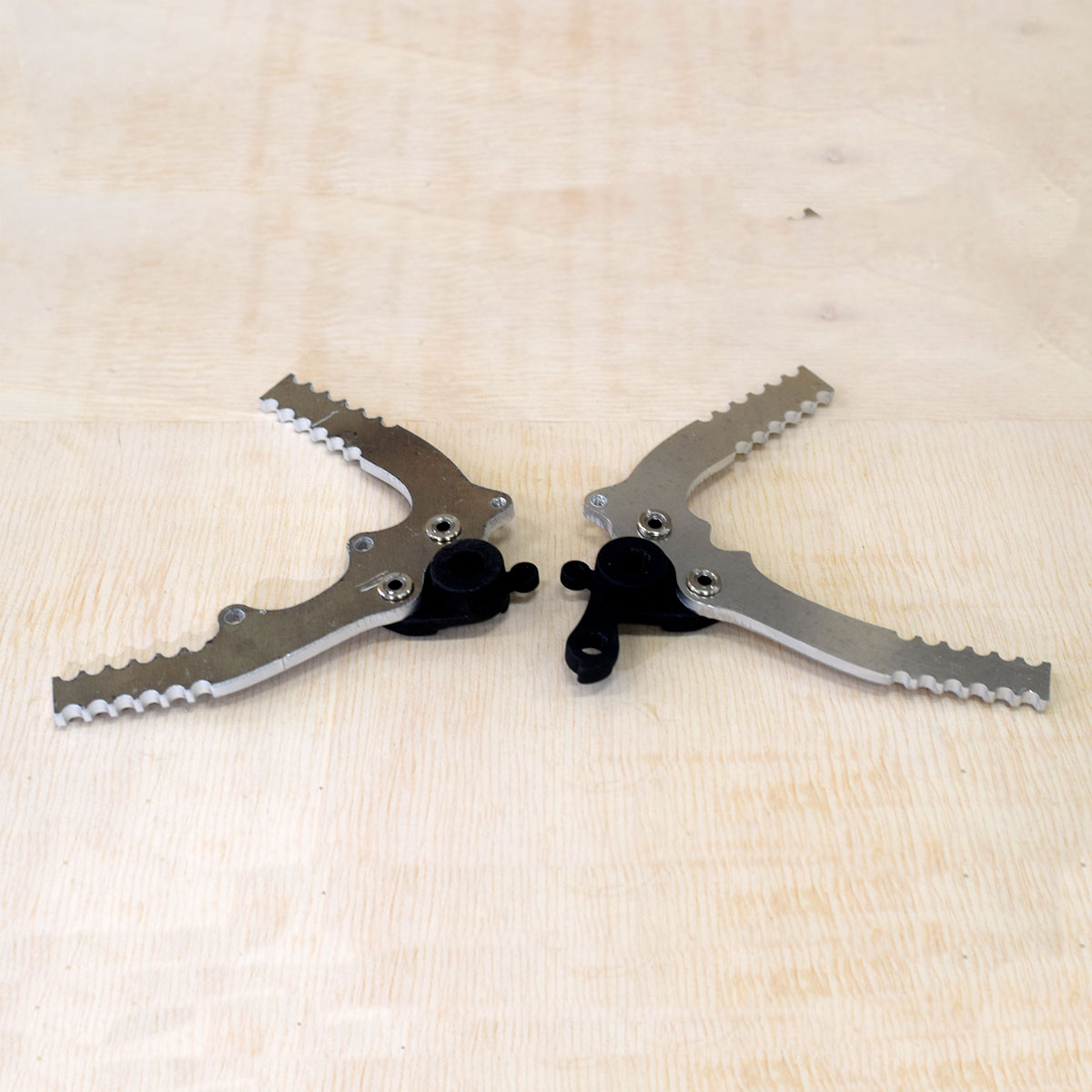
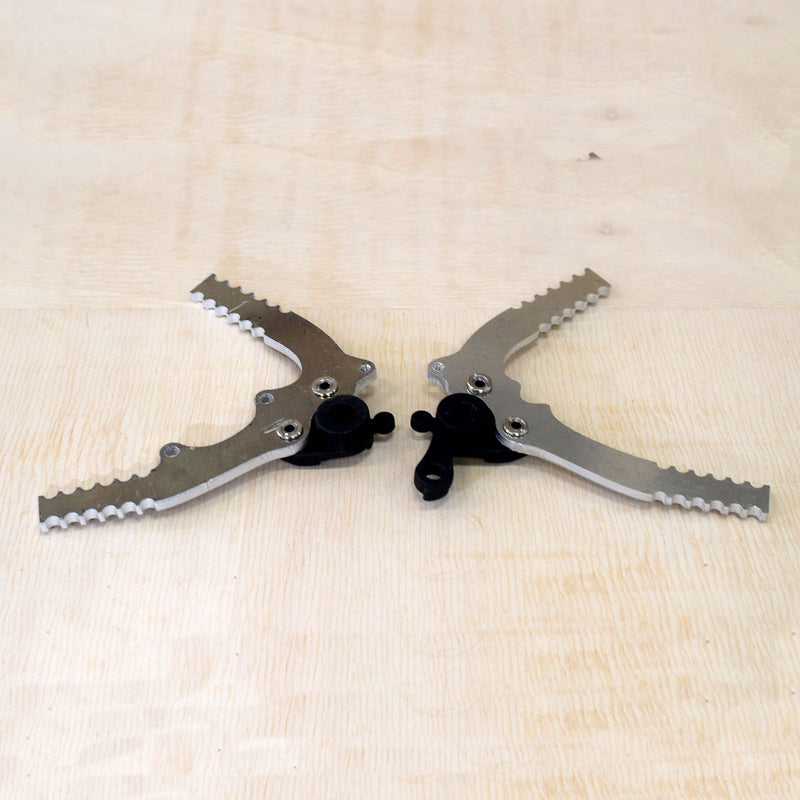
Modular Bamboo Bicycle Dropouts
Crafting a bamboo bicycle frame requires flexibility, precision, and the ability to adapt. Our modular dropout system is designed specifically for bamboo frame builders, ensuring your build can accommodate any drivetrain or braking system—both now and in the future.
Over the years, many builders have completed their frames only to realize they need disc brakes, a thru-axle, or a different groupset. With our modular system, you won’t face that problem. These interchangeable dropouts give you the freedom to future-proof your frame and create a truly versatile bamboo bike.
🔹 Why Bamboo Frame Builders Love These Dropouts
✅ Total Flexibility for Your Build – Whether you’re designing a single-speed, hub gear, or geared bamboo frame, these dropouts adapt effortlessly.
✅ Multiple Fitting Options for Custom Setups:
- Horizontal Dropouts – Perfect for single-speed and hub gear bikes.
- Standard Vertical Dropouts – Includes a rear derailleur mount for geared frames.
- 12mm Thru-Axle (12 x 1.5) – Ideal for modern drivetrain compatibility.
- Direct Mount Disc Brake Fittings – Supports powerful braking performance.
- Mudguard & Pannier Mounts – Essential for touring and commuting builds.
- 5 Modular Fittings – Designed to be interchangeable for ultimate customization.
✅ Future-Proof Your Frame – No need to rework your bamboo frame—simply swap out the dropouts to fit new components.
✅ Optimized for Bamboo Frame Construction – Precision-machined 6mm 5251 aluminum provides strong yet lightweight support while bonding seamlessly with bamboo lugs and epoxies.
✅ Designed for Seamless Integration – Engineered for easy installation in custom bamboo bike frames.
📏 Technical Specifications
- Material: 6mm 5251 aluminum
- Compatibility: Suitable for single-speed, hub gear, geared, and disc brake bamboo bike frames
- Fitting Options: 5 modular dropouts for adaptable frame building
- Thru-Axle Size: 12mm x 1.5
🌿 Why These Dropouts are Perfect for Bamboo Bicycle Builders
✔ Frame Adaptability – Build once, modify as needed—no need to reconstruct your frame.
✔ Bamboo-Specific Design – Works with bamboo lugs and epoxy bonding, ensuring a strong and secure fit.
✔ Versatile for Any Riding Style – Whether you're crafting a commuter, touring, MTB, or gravel bamboo frame, these dropouts allow limitless possibilities.
✔ Built for Durability – Lightweight yet incredibly strong, ideal for custom and high-performance bamboo bike builds.
❓ Frequently Asked Questions (FAQs)
🔹 Can I switch dropouts after my bamboo frame is built?
Yes! The modular design allows you to swap dropouts at any stage, preventing the need for frame modifications.
🔹 Is this compatible with disc brakes and thru-axles?
Absolutely! Includes direct mount disc brake fittings and a 12mm x 1.5 thru-axle dropout option.
🔹 How do these work with bamboo bike lugs and bonding?
The 5251 aluminum material is designed for optimal bonding with bamboo frame joints using epoxy or mechanical fixing.
🔹 Can I use these for bikepacking and commuting builds?
Yes! These dropouts include mudguard and pannier mounts, making them perfect for long-distance riding and adventure builds.
Frame Sizing Guide
If you are in between two sizes we recommend going for the smaller size as you can adjust the frame fit on smaller frame but if the frame is two large then you may be unable to adjust. Alternatively choose a custom frame.

Bike Geometry - Introduction
Frame sizes are referred to as geometry, the geometry encompass the shape, length and the angles of the frame. Each frame type will have certain angles and measurements to give you a ride characteristics associated with the frame type.
A road bike will typically move the rider into a more forward position (seat and head tube angles of 72/73 degrees) to maximise power transfer and elongate the rider to improve aerodynamics.
A dutch style bicycle will be another extreme of geometry moving the rider further back (seat and head tube angles of 68 degrees) on the frame to suit relaxed riding and flat terrain as well positioning the rider in a upright position.
You can read many books on geometry! This a brief insight. Try and select a bicycle that suits your requirement and the geometry should match. E.g Road bike for road usage, gravel for mixed on and off road, MTB for off-road trails.
How to check your fit for a frame.
The key measurements used for a stock frame are you inside leg and overall height.
Height
- Simply stand upright in bare feet, with your back against a wall/doorframe.
- Place a pen or pencil atop your head and parallel to the floor.
- Make a small mark on the surface and measure.
Inside Leg
- In bare feet; stand upright with your back against a wall.
- Place a book/ruler between your legs and level with your crotch.
- Have someone measure the distance from the top of the book/ruler to the floor.
If you find that you fall between 2 sizes, the general rule of thumb is to opt for the smaller size. Why you may ask? Well, it’s because it’s generally considered easier to make a bike that’s a little small fit than one that’s too large. There are certain alterations that you can make to a smaller bike to correct the sizing.
These include: lengthening the stem length, crank length and raising the saddle height. It is much more difficult to adjust a bike that is too large to fit the rider. After all, a seat post can only drop down so far. Whereas fitting too short a stem can result in overly responsive (twitchy) steering.
More about components - Traditionally frames would be built at a local bike shop and the frame would determine the fit with fixed component options.
With modern compact frames most of the final frame fit will be done with components to adjust the position of the rider using a broad range of component options like, seatpost type, stem length, handlebar width etc.
Drop us a email to info(@)bamboobicycleclub.org with any questions