The UCL engineering students who put bamboo under load
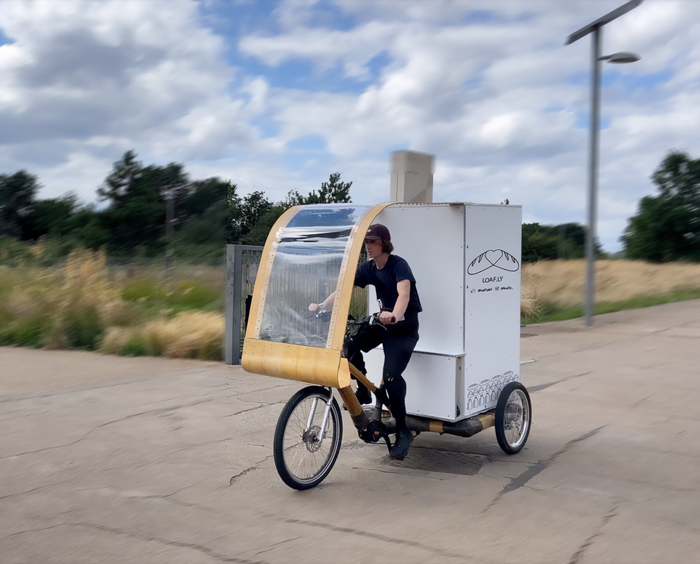
Over three consecutive years, UCL Mechanical Engineering Masters students partnered with BBC to build increasingly ambitious bamboo bicycles — culminating in a fully electric cargo bike.
Figures from BBC programme records. Reoffending is a contested measure — we report what we can verify.
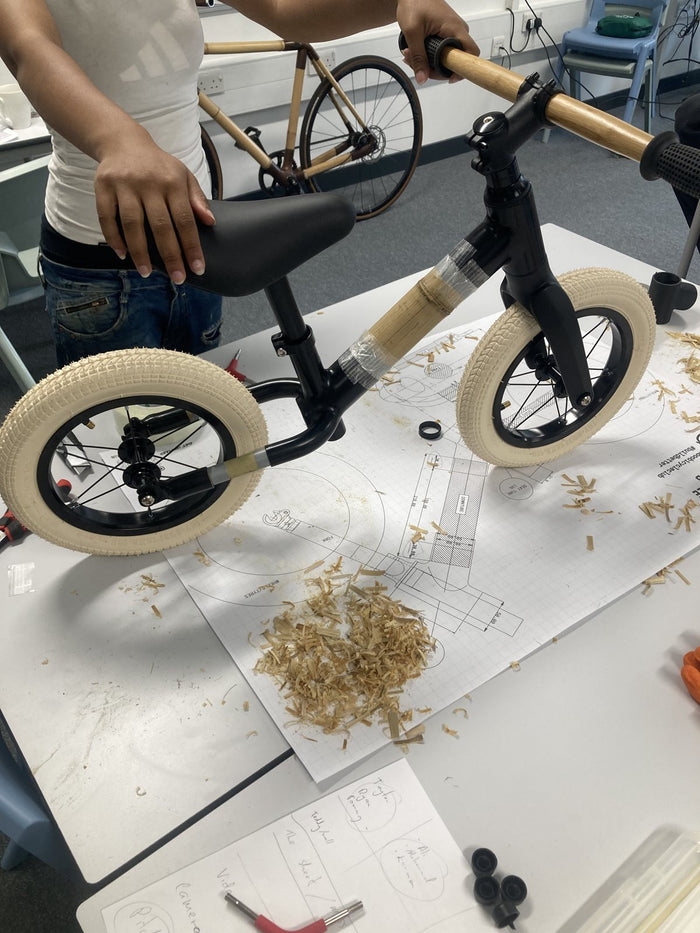
For several years, Bamboo Bicycle Club ran a live engineering brief with Master's students in UCL's Department of Mechanical Engineering. Each cohort took on a real design problem — and used proper testing, not assumptions, to find out what a grass frame can actually carry.
The challenge
A cargo frame asks something an ordinary bike never does: carry a heavy, shifting load, day after day, without flexing or failing. Bamboo is light and strong in tension, but a load-bearing frame is a genuine engineering test. The students set out to find where the limits really were — and to design something useful with the answer.
What we did
We brought the frame-building knowledge; the students brought the engineering rigour and the questions we don't always have time to ask ourselves. The partnership was supervised on the university side by Dr Eral Bele and on ours by founder James Marr, and it ran as a structured group design project (UCL's MECHM010).
One cohort — team "Pedal Progress" — spent six months on a cargo bike designed for a low-resource farming context in Ethiopia. They tested bamboo's structural properties (tensile strength, joint load distribution, fatigue), ran finite-element analysis on competing frame layouts, and built a frame designed to carry a 150kg cargo load with a 0.35m³ capacity, using recycled-aluminium and hemp-fibre composite joints. A later cohort took the work electric: a bamboo e-bike with an integrated 36V battery, a 250W rear-hub motor, seven-speed gearing and a claimed 60km range — the whole bike, battery included, coming in around 17kg.
Outcome
The students completed their briefs: working prototypes designed around their own structural testing rather than guesswork. The value wasn't only the bikes. It was the data — an evidence-led picture of how bamboo carries load, and proof that the material stands up to formal engineering analysis, not just craft confidence. That understanding feeds back into everything we design.
That thread runs right through to our current work. The e-cargo bike we build today is made from Guadua bamboo, flax and recycled aluminium, and ships flat-packed anywhere in the world to be assembled with basic tools — a sustainable answer to city deliveries that started, in part, with students putting canes under load in a workshop.
In the students' own words
From the Pedal Progress team's UCL project poster: "Go further with bamboo — cut out short car rides." Their aim was simple: a lighter electric bike, with the battery built into the frame rather than bolted on, to replace short journeys that would otherwise be made by car.
Why it matters
Bamboo Bicycle Club has always been more than a bike kit. Working with a university like UCL lets us pressure-test the material everything we do is built on, and lets students put their engineering to a real, useful object. It is one strand of a wider education programme that now runs with schools and universities in the UK and abroad — the same bamboo, the same hand tools, turned into a way to teach design, materials and making.
Proof and links
- Independent coverage of our Guadua bamboo e-cargo bike: InsideEVs, October 2023
- Education and university projects: bamboobicycleclub.org
every bike we sell funds a place on the programme.
Fund a cohort, offer placements, or partner with us. This is how stories like this one keep happening.
Support the mission →