Kenya: teaching the build, not shipping the bike
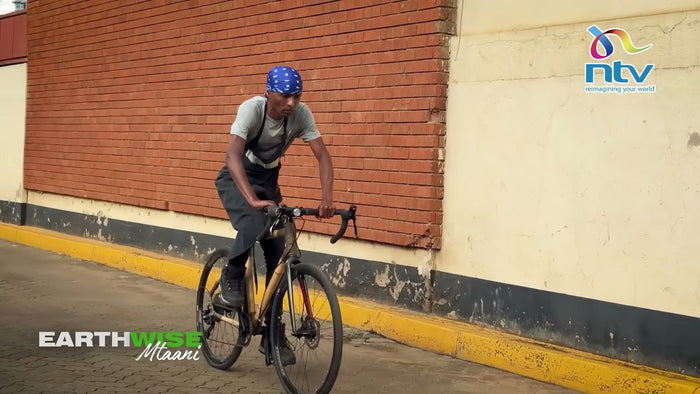
BBC spent time in Kenya teaching community members to build bamboo bicycles. The goal was not to produce frames — it was to leave the knowledge permanently in the community.
Figures from BBC programme records. Reoffending is a contested measure — we report what we can verify.
Most "bikes for Africa" schemes ship in finished frames. Bamboo Bicycle Club went the other way: we spent a week in Kenya teaching people to build and mend their own.
The problem with a shipped bike
When a frame arrives in a container, the hardware turns up but the know-how doesn't. The day something breaks, with no spare parts and nobody trained to fix it, the bike stops and stays stopped. The dependency just carries on.
A bicycle in rural Kenya isn't a hobby. It is how people get to work, to a clinic, to market. So the question that matters isn't how many frames you can post out — it's whether a community can make and mend its own.
What we did
BBC was invited to a skill centre in Mwala, in Machakos County, working alongside Promoting Africa e.V., a Munich-based NGO already active there. The trip was delivered through BBC's Munich team.
We started with the bikes that were already on site — around twenty of them — fixing them up and getting them back into working order, and teaching the staff and students how to maintain and repair them. Within a few days most of the bikes were running and people were cycling around the centre. Then we got stuck into a proper bamboo bike build with the group: cutting and mitring the canes, binding the joints, setting the geometry. They finished the frame in a matter of days.
Bamboo suits this kind of work. It grows in the region, so the raw material is local. It needs no industrial processing, no global supply chain and no specialist tooling that breaks and can't be replaced. The method can be taught hand to hand, then passed on again.
That is the whole point of teaching the build rather than shipping the bike. Once someone can build a frame, they can also maintain it, adapt it, and show the next person how — without waiting on a shipment from the other side of the world.
Why it matters
Kenya is one of the places that proves BBC's method travels. The same craft we teach in a London workshop, in classrooms and inside a prison workshop, holds up at a skill centre in Machakos with very different tools and conditions. It is part of a wider international thread — a partnership with Urumuri followed in Rwanda — and it sits at the heart of what BBC is: not a London workshop with global ambitions, but an international programme that happens to be based in London.
"Making bicycles simple — when we spent time in Kenya teaching people to build bikes."
— Bamboo Bicycle Club
Proof and links
- Kenya skills-transfer week at a skill centre in Mwala, Machakos County, delivered with Promoting Africa e.V. (Munich) and BBC's Munich team.
- BBC's own film of the visit: "Building Bamboo Bikes in Kenya: A Community Workshop."
- Promoting Africa e.V. documented the Bamboo Bicycle Club's Kenya work on its own channels.
every bike we sell funds a place on the programme.
Fund a cohort, offer placements, or partner with us. This is how stories like this one keep happening.
Support the mission →