Via Claudia Augusta — Crossing the Alps on a Bamboo Touring Bike
Some photos stop you in your tracks.
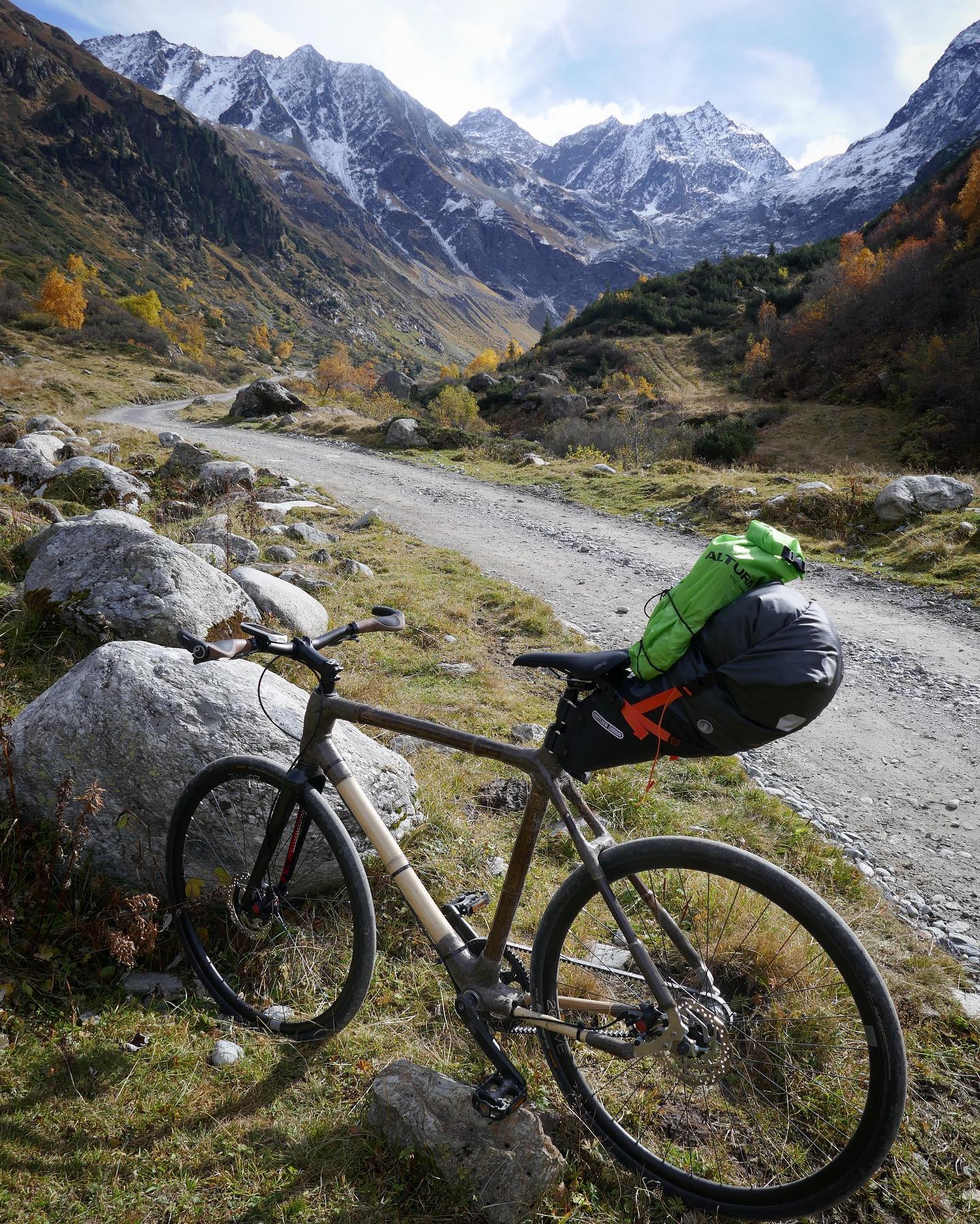
A bamboo touring bike leaning against a boulder on a gravel track high in the Alps, autumn colours blazing gold and amber in the valley below, snow already dusting the peaks above. The scale of the mountains behind makes the bike look almost small — almost. Somehow the bamboo frame holds its own.
The build is loaded for a proper trip. An Ortlieb rear bag sits behind the seat, with a large Altura dry bag on top — big enough for a sleeping bag, bivvy, and a change of clothes. Drop bars, a relatively upright touring position. The natural bamboo and dark resin joints sit against that mountain backdrop like they belong there. In some strange way, they do. Bamboo is a mountain material in its own right.
The route in the caption is something else entirely: crossing into the Alps from southern Germany, following the old Roman road known as the Via Claudia Augusta. One of the oldest Alpine crossing routes in Europe, originally built to connect the Roman Empire from the Po Valley to the Danube. Two thousand years of history, ridden on a bamboo bicycle built by hand.
That's not an afternoon out. That's a proper journey.
The practical stuff: the frame joints are intact despite what's presumably hundreds of kilometres of loaded riding. The bamboo tubes show the natural weathering you'd expect after a long trip — slight darkening, variations in tone along the culm. It looks used. It looks earned.
Most people keep their bamboo bikes for local rides. This one's clearly going places.
If you're planning an Alpine crossing and want a frame that can handle it — bamboo is a more serious option than most people think. The dampening properties on rough high-Alpine gravel roads are something else.
The Alps on a handbuilt bamboo bike. Following a Roman road. Loaded with camping gear.
Yeah. That'll do. 🎋
Build a gravel bike
Build your own bamboo bike — in a London workshop or from a kit shipped to your door. No experience needed.
Build a gravel bike →