Teaching STEM with purpose: how schools build with bamboo
A bamboo bike is a curriculum you can hold. In schools and universities across the UK, students learn material science, structural design and sustainable manufacture by building a frame from scratch — and then riding it.
The challenge
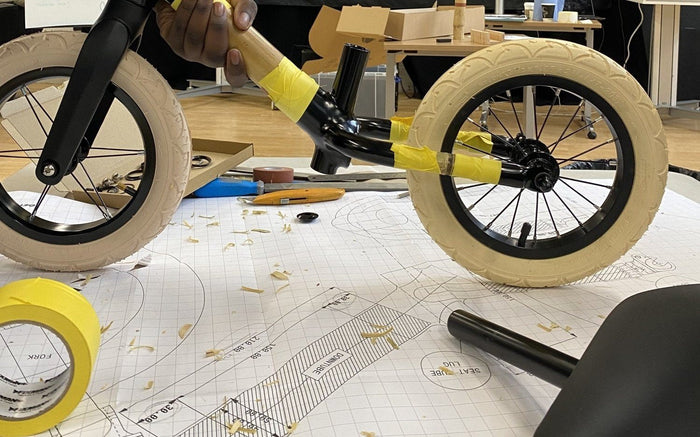
STEM can feel abstract on the page. Tensile strength, structural design and material behaviour are easier to grasp when you are sanding a real joint and trusting it to hold your weight. A bamboo-bike build turns the theory into something you make, test and ride — and it is forgiving of the mistakes that good learning needs.
What we did
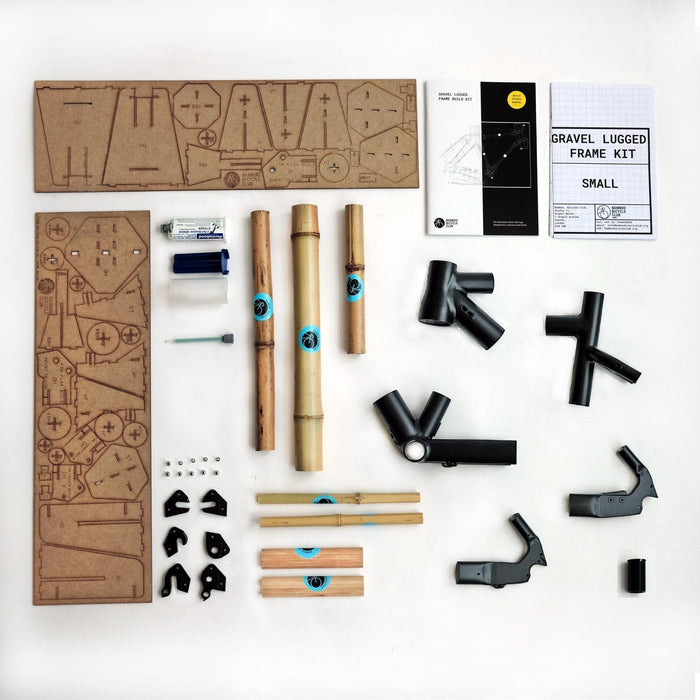
Bamboo Bicycle Club runs build workshops with schools and universities in the UK and abroad. The format flexes to the setting: a one-day taster or a multi-week design project. The work maps naturally onto material science, structural engineering and sustainable design.
A few real examples from across the schools and education programme:
- Southbank UTC — a London university technical college — ran one of our earliest school programmes, where six students each built their own bamboo bike. The college took our jig components in-house, so teachers could run the build themselves.
- The Oratory School launched the first-ever Bamboo Bicycle Club inside a school, run with James Marr and Russell Hollie — a standing option for its students and the public that no other UK school offered at the time.
- King's College London worked with us to explore introducing bike-building into the university, starting with a practice workshop for teaching staff.
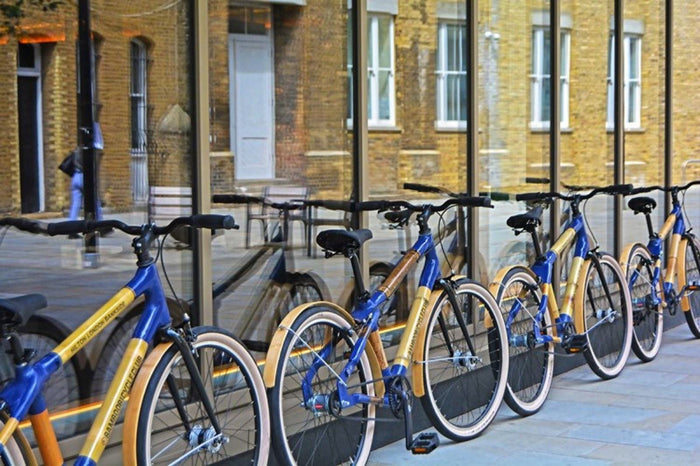
- Reed's School ran end-of-term bamboo racing, with four bamboo bikes built by students.
- Bradfield College ran our build as part of its "Beyond Bradfield" programme with head of design Nick Mills — a long-standing cross-curricular STEM and sustainability touchpoint.
Outcome
Since 2012, Bamboo Bicycle Club has trained more than 4,000 builders in over 45 countries, and reached 500+ students through its education work. The deeper outcome is the one teachers describe: a student who thought engineering "wasn't for them" finds out, with a frame in their hands, that making things is achievable when you break it into steps.
In their words
The head of The Oratory School, on launching the workshop:
"I'm very excited that James Marr and Russell Hollie have agreed to begin the first-ever Bamboo Bicycle Club in a school. This is something that will make The Oratory School unique. There is not another school in the UK with this as an option for its students or the public."
Why it matters
Craft and sustainability sit at the heart of what we do. A bamboo frame is a low-carbon object a young person builds with their own hands — and the act of building it teaches the science, the design and the patience all at once. That is STEM with a reason to care about it.
Proof and links
- Southbank UTC: Six Students Build Six Bikes
- The Oratory School Launches a Bamboo Bike Workshop
- King's College London bamboo staff workshop
- Reed's School: End-of-Term Bamboo Racing
Bring it to your school
Hands-on craft and STEM for schools and colleges. Start with a free Speaker introduction.
Bring it to your school →