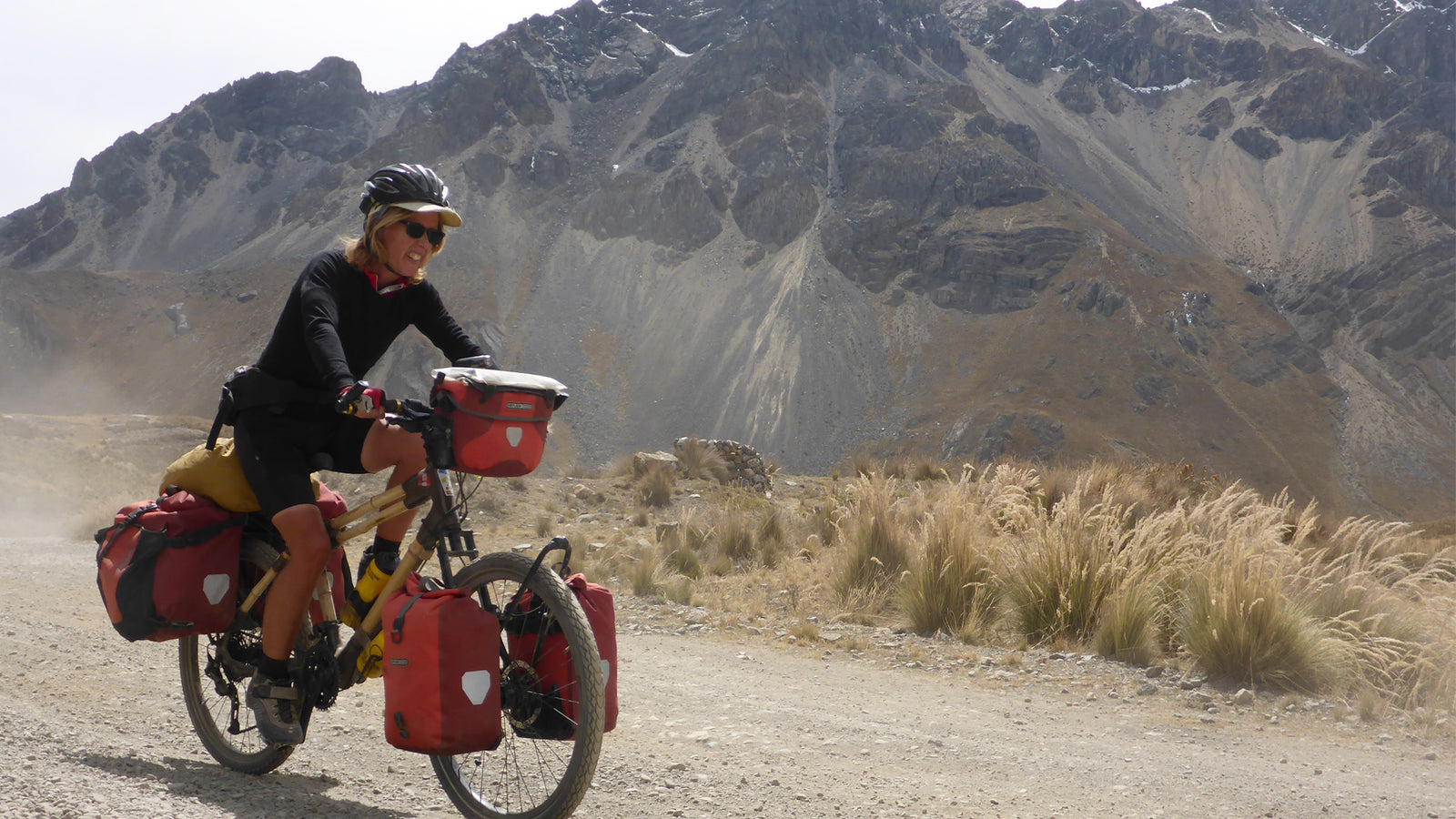
Total Women's Cycling: Kate Rawles on Solo Cycling Through South America on a Bamboo Bike
Total Women’s Cycling
6 July 2018 | Feature Interview | Kate Rawles
“The bike was unexpectedly brilliant. That was the first time I’d ever built a bike and I really didn’t know if I was going to get to the end.” — Kate Rawles, on Woody, her BBC-built bamboo frame
Total Women’s Cycling — one of the UK’s leading cycling publications focused on women in the sport, covering everything from sportive training to expedition adventure — published a full interview with Kate Rawles in July 2018, five months after she completed the Life Cycle expedition. The interview covered her experience building Woody at BBC’s London workshop, the physical and mental demands of 8,288 miles through South America, and her relationship with bamboo as a material.
Kate Rawles was not a lifelong cyclist. She was an environmental philosopher who chose cycling as her mode of adventure because it was slow enough to pay attention, fast enough to cover ground, and low-carbon enough to be consistent with the values she was advocating. The BBC workshop gave her a bike that matched those values precisely: built from a plant, by her own hands, at low cost, with nothing manufactured that didn’t need to be.
The first-time framebuilder
Kate’s description of Woody as “unexpectedly brilliant” — combined with the admission that she genuinely didn’t know if she’d get to the end of the build — is one of the most useful testimonials in BBC’s press archive. It is honest, specific, and addresses directly the anxiety that most BBC workshop customers bring to their first session: can I actually do this? Kate Rawles built her frame from scratch with no prior experience and rode it 8,288 miles. The answer to the anxiety is not reassurance but evidence.
Total Women’s Cycling’s readership — women cyclists at every level, from beginners to competitive racers to expedition adventurers — is a community that responds to exactly this kind of evidence. Kate Rawles was not a sponsored athlete with a team of mechanics. She was an independent adventurer who built her own bike and rode it alone through some of the most demanding terrain in the world. That story is relatable across every level of the Total Women’s Cycling audience.
“There’s something lovely about anteaters. They never eat all the ants, they always leave enough for the anthill to regenerate, and I just think there’s a great message for humans: ‘don’t eat all the ants.’” — Kate Rawles, Total Women’s Cycling, July 2018
The expedition’s message
Kate’s anteater observation — made in conversation with Total Women’s Cycling — is characteristic of her approach to environmental communication: specific, surprising, and immediately comprehensible. She didn’t lead with statistics about species extinction rates. She led with an anteater that never eats all its ants. That precision of communication — finding the concrete image that carries the abstract argument — is part of why the Life Cycle story resonated far beyond the environmental press and reached women’s cycling media, lifestyle publications, and university news services simultaneously.
BBC was the starting point for that journey: the London workshop where Kate built Woody in November 2016. Total Women’s Cycling’s July 2018 interview reached the cycling audience that Kate’s expedition most directly inspired — women who cycle, or want to cycle, and who understand adventure as something you do yourself rather than something that happens to you.
Book a build
Build your own bamboo bike — in a London workshop or from a kit shipped to your door. No experience needed.
Book a build →