The Guardian: Build it yourself at the UK's first bamboo bike workshop

The Guardian — Bike Blog
Friday 16 November 2012 | by James Stewart
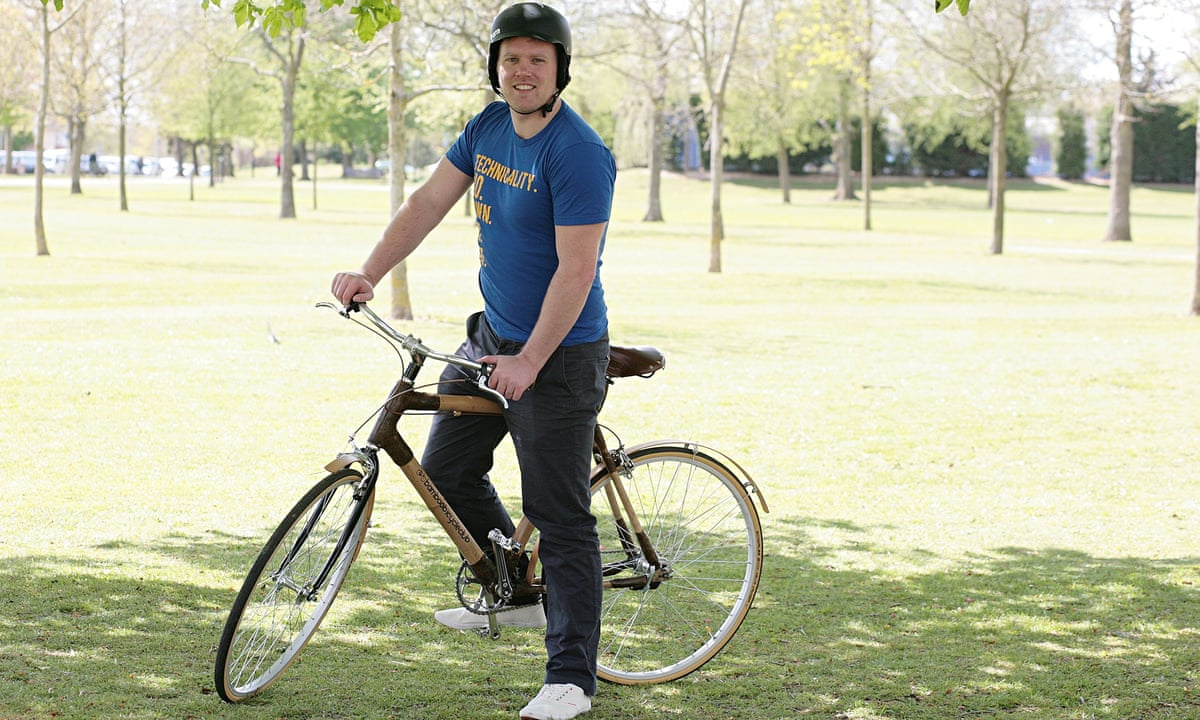
“I take James’s bike for a spin and the ride is light, stiff and smooth thanks to bamboo’s ability to dampen vibration. Impressive, considering I target every pothole.” — James Stewart, The Guardian Bike Blog
It’s Saturday morning in Hackney Wick, east London, and apart from a mechanic deep in the bowels of a truck, the only sign of life among the small factories on a backstreet is a whine of machinery from an upper window — work has begun at Bamboo Bicycle Club.
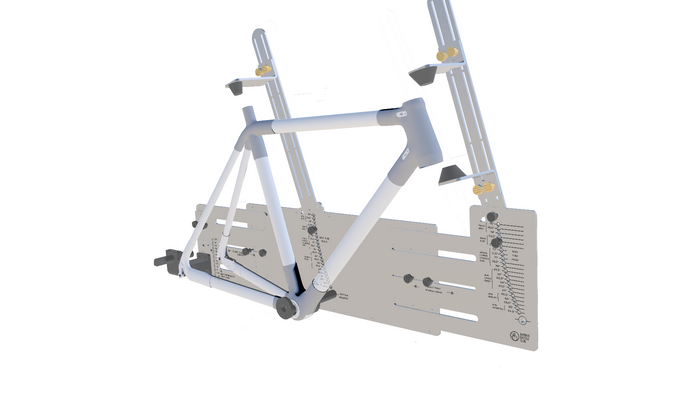
Guardian journalist James Stewart arrived at the workshop to find three men in their late-20s already three hours into building their custom bamboo frames. Jigs had been set, bamboo selected from a stockpile, crossbars and seatposts being cut to lengths specified on each participant’s blueprint. “There’s a sense of energy and industry. And of fun. Woodwork class was never like this,” he wrote.
The origins of Bamboo Bicycle Club
The article described how bamboo had emerged as one of the most interesting trends in bicycle construction, with Californian manufacturer Calfee Design reviving a method pioneered as early as 1894 — but at a cost of up to $5,852 ready to ride, far out of reach for most cyclists.
Engineers James Marr and Ian McMillan had spent years researching bamboo frame construction in a shed in Brecon, Wales — refining techniques, experimenting with joint construction, developing the vocabulary of “close-noded thick-wall tubes” that would define their process. Their original plan was to establish a boutique bamboo bicycle manufacturer. They abandoned it when they realised the real value lay in something different: sharing the craft rather than selling the product.
The Bamboo Bicycle Club launched in September 2012 — more community than company. The £389 course price included a computer-designed custom frame and a weekend of building. Monthly workshops ran in Hackney Wick. Gear packs for road-ready builds were available from £218.
Two days in the workshop
Stewart documented both days of the course in detail. Day one: selecting bamboo for strength (not just diameter, but ensuring proposed cuts fall between nodes), mitring joints, setting tubes in jigs. The front triangle used 40mm diameter bamboo; seat and chainstays used thinner, more precise tubes. Chromoly inserts were fitted for handlebars, forks and seatpost; stainless steel dropouts slotted into the chainstays.
Day two was for the lugs — what Marr and McMillan called the wraps. Hemp webbing wrapped around each joint and dropout, then saturated with epoxy to form bonds that dispersed loads across the frame rather than concentrating them at a single point. The result looked rougher than a professional frame. That was part of the point.
Stewart noted that all participants on this particular workshop were engineers by trade — but observed that this was “no coincidence” given that the course attracted people drawn to understanding how things work. He tried and failed to find a reason the bikes wouldn’t hold together. Ian McMillan had been commuting 16 miles a day on his for over a year. James Marr had spent three months trying to destroy one off-road without success.
“If Calfee are Coldplay, Bamboo Bike Club are punk; less up against the big names than creating a bike that is about DIY and will engender more passion than the average factory-line model.” — James Stewart, The Guardian Bike Blog
About The Guardian Bike Blog
This feature appeared in The Guardian’s dedicated cycling section in November 2012 — two months after BBC launched. The Guardian’s Bike Blog was one of the UK’s most widely-read cycling publications, reaching a large, environmentally-conscious urban audience. This was BBC’s first national press coverage, placing the workshop concept in front of a mainstream readership at the precise moment the company was launching.
The coverage was significant not just for the exposure it generated, but for the tone it set. Stewart’s framing — community over commerce, punk over Coldplay, experience over product — became the lens through which subsequent journalists understood BBC. That framing has held for over 14 years.
At the time of publication, BBC’s London workshop charged £389 per course. Today, workshops run from £695. The fundamentals of the two-day build process described by Stewart in 2012 remain unchanged.
Book a build
Build your own bamboo bike — in a London workshop or from a kit shipped to your door. No experience needed.
Book a build →